
WHO I AM
A few months ago, I found myself sitting alone on a small folding stool on a street corner in Los Angeles, carrying a box under my arm containing a film no one had asked to read.
No introductions.
No shortcuts.
No guarantees.
Just a story I deeply believed in.
I am a Brazilian filmmaker and creative director. For more than two decades, I worked in advertising, learning how to shape emotion through image, rhythm, silence, music, and visual storytelling. Advertising taught me discipline and precision, but somewhere underneath all of it, cinema was always waiting for me.
LUZ was born from a real experience that changed my life.
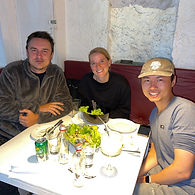
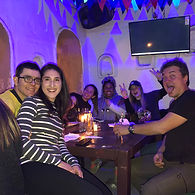
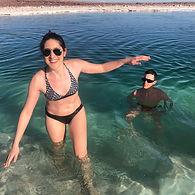
During a difficult moment, feeling emotionally exhausted and disconnected from myself, I traveled alone to the Atacama Desert searching for silence and perspective. There I met Luz and Eduardo, a Chilean couple I spent days with before understanding that Eduardo was blind.
That realization stayed with me for years.
Not because of the blindness itself, but because it forced me to confront how little attention I had been paying to life, to people, and to the small human moments happening around me every day.
After I understood Eduardo was blind, every interaction between them gained a completely different meaning. The patience. The precision. The invisible language they had created together. The way Luz guided him naturally, almost imperceptibly.
It made me realize that love, in its purest form, may actually be a form of attention.
That emotional experience became the foundation of LUZ.
The writing process was long and obsessive. Thousands of pages, notebooks, drafts, rewrites, scene variations, visual studies. I approached the screenplay with emotional vulnerability, but also with discipline and structure, searching constantly for honesty in every scene.
Over time, the project expanded far beyond the screenplay itself. I personally developed the visual identity, the website, the presentation materials, and even the physical box carrying the film, trying to make every detail emotionally connected to the story it represented.
That journey eventually brought me from Brazil back to Chile, and later to Los Angeles, carrying the project by myself from meeting to meeting, office to office.
Sometimes simply knocking on doors with courage and a box under my arm, hoping I might cross paths with someone capable of seeing in LUZ the same thing I saw in it years ago.
No shortcuts.
Only work, persistence, and belief in the story.
I still think about that moment sometimes. Sitting quietly on that corner in Los Angeles with a box on my lap, not knowing if any door would ever open.
But maybe cinema begins exactly there.
With someone holding onto a story strongly enough to keep walking with it long before the world has any reason to believe in it too.
WHY THIS STORY
I went to the Atacama during a difficult moment in my life. I was feeling disconnected, frustrated, and emotionally exhausted. During that trip I met Luz and Eduardo and spent days with them before understanding that Eduardo was blind.
That realization lived with me for years. Not because of the blindness itself, but because it made me question how little attention I had been paying to people, to life, and to small human moments around me. LUZ was born from that feeling.
WHAT MOVED YOU MOST ABOUT LUZ AND EDUARDO’S RELATIONSHIP?
What moved me most was not Eduardo’s blindness itself, but the way their relationship functioned because of it. I started noticing the small codes they had created together. The precision in the way Luz described things. The patience. The attention. The constant presence required between them.
It made me realize that love, in its purest form, may actually be a form of attention.
After I understood Eduardo was blind, every small interaction between them suddenly gained a completely different meaning for me. Their silences, the way they moved together, the way she guided him without making it visible. It deeply affected me because it felt incredibly human and intimate, never sentimental.
That emotional realization became one of the foundations of LUZ.
WHAT IS THE FILM REALLY ABOUT
For me, LUZ is about attention. We live in a world obsessed with being seen, but not necessarily with seeing.
The film explores the difference between looking and noticing. It’s about perception, loneliness, affection, nostalgia, and human connection.
WHY IS IT SET IN ATACAMA
Because the Atacama changes scale. Emotionally and visually. It makes human beings feel small, but at the same time strangely connected. The silence there is powerful. The sky forces reflection. The desert became the perfect emotional landscape for a man confronting himself.
And it is where it all really happened.
WHY AUDIENCES WOULD CONNECT TO THE FILM
Because almost everyone today feels overwhelmed, distracted, nostalgic, emotionally tired, or disconnected in some way. Even though the story is intimate and specific, the emotional experience is very universal.
The film isn’t asking people to admire the characters. It’s inviting them to recognize themselves in them.
WHAT IS THE TONE OF THE FILM
It moves between melancholy, humor, tenderness, and contemplation. I never wanted the film to feel heavy or self-important. Life is rarely one emotional note.
Even during painful moments, people joke, misunderstand each other, eat ice cream, listen to bad music, get distracted. I wanted the film to feel alive.
WHAT FILMS INSPIRED ME WRITING LUZ
I’m inspired by filmmakers who trust silence, atmosphere, behavior, and emotional observation. Wim Wenders, Cuarón, Yokiro Takita, Kore-eda, Terrence Malick.
Films like Y Tu Mamá También, Paris, Texas, Sideways and Departures, among many others.
But I also wanted LUZ to have a very Latin American warmth and humanity.
WHY DIRECTING THIS FILM MATTERS TO ME
Because I understand this story very personally. I lived the experience that inspired it, but more importantly, I understand the emotional contradictions inside it. The nostalgia, the loneliness, the need for connection, the tendency to miss important things while searching for meaning somewhere else.
I think directing is largely about emotional sensitivity and attention, and this story comes from a very honest place for me. Martin Scorsese once said: "The most personal is the most creative".
THE FILM FEELS IMPERFECT AT TIMES. WAS THAT INTENTIONAL?
Yes. I didn’t want the film to feel mechanically polished. Human beings are awkward, contradictory, funny, emotional, distracted.
I wanted the conversations and relationships to feel alive, not overly written.
Some of my favorite films feel imperfect in a human way, and that honesty stays with people longer than perfection.
WHAT MAKES LUZ DIFFERENT FROM OTHER INTROSPECTIVE INDIE DRAMAS?
I think many contemplative films become emotionally distant or intellectually cold. I wanted LUZ to remain warm and accessible.
The film has philosophy, but it also has humor, tenderness, awkwardness, friendship, music, food, astronomy, karaoke, little absurd moments. It never stops being human.
WHAT I WANT PEOPLE TO FEEL WHEN THE FILM ENDS
I hope people leave feeling quieter. More attentive. I hope the film makes them think about the people they love, the things they overlook, the speed of modern life, and the fragile beauty of small human moments. Not in a didactic way. Just emotionally. Like something inside them slowed down for a while.
THE REAL JOURNEY THAT INSPIRED LUZ





“Go into yourself. Search for the reason that bids you write; find out whether it is spreading out its roots in the deepest places of your heart… Confess to yourself whether you would have to die if you were forbidden to write.”
Rainer Maria Rilke, Letters to a Young Poet